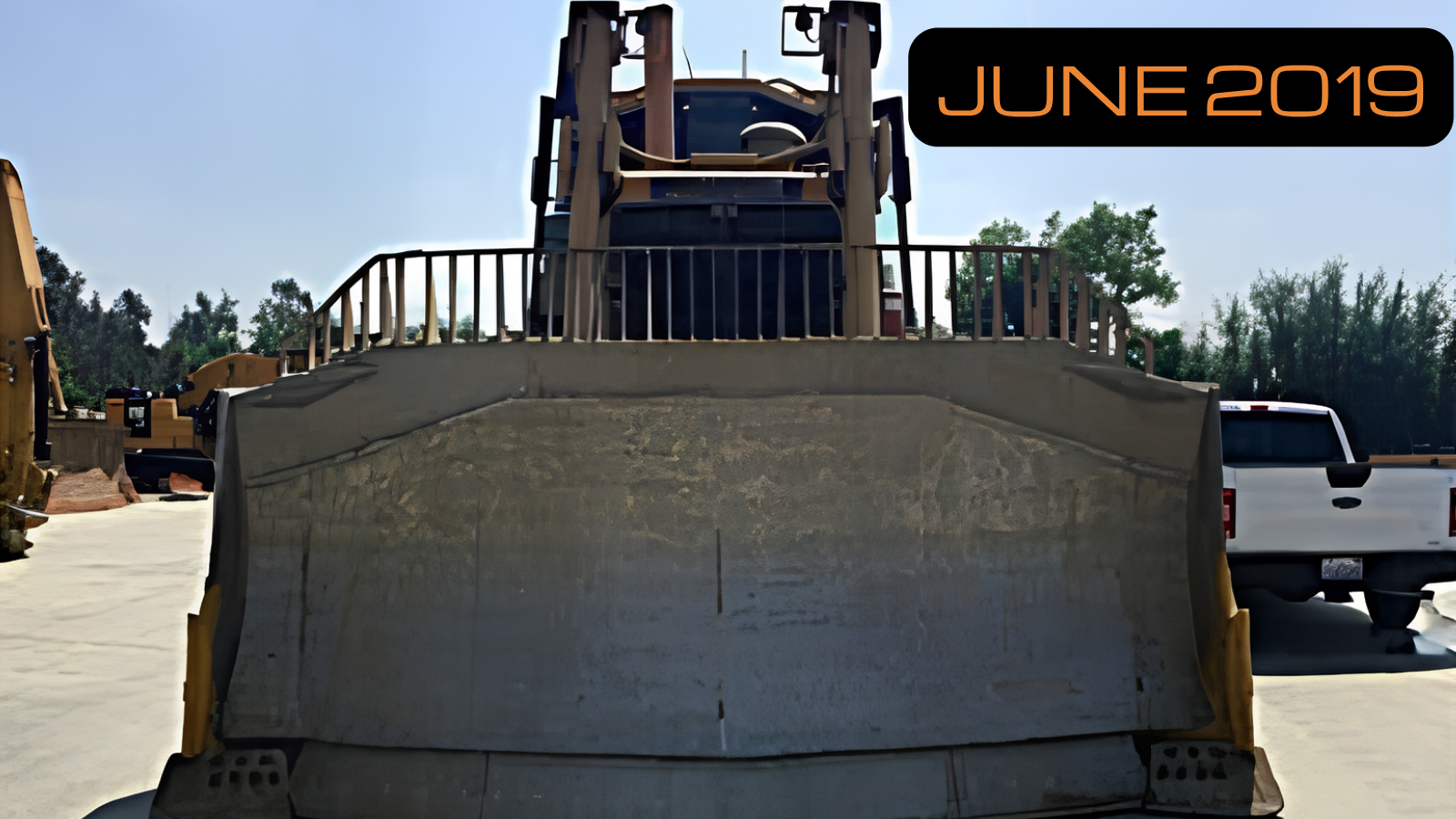
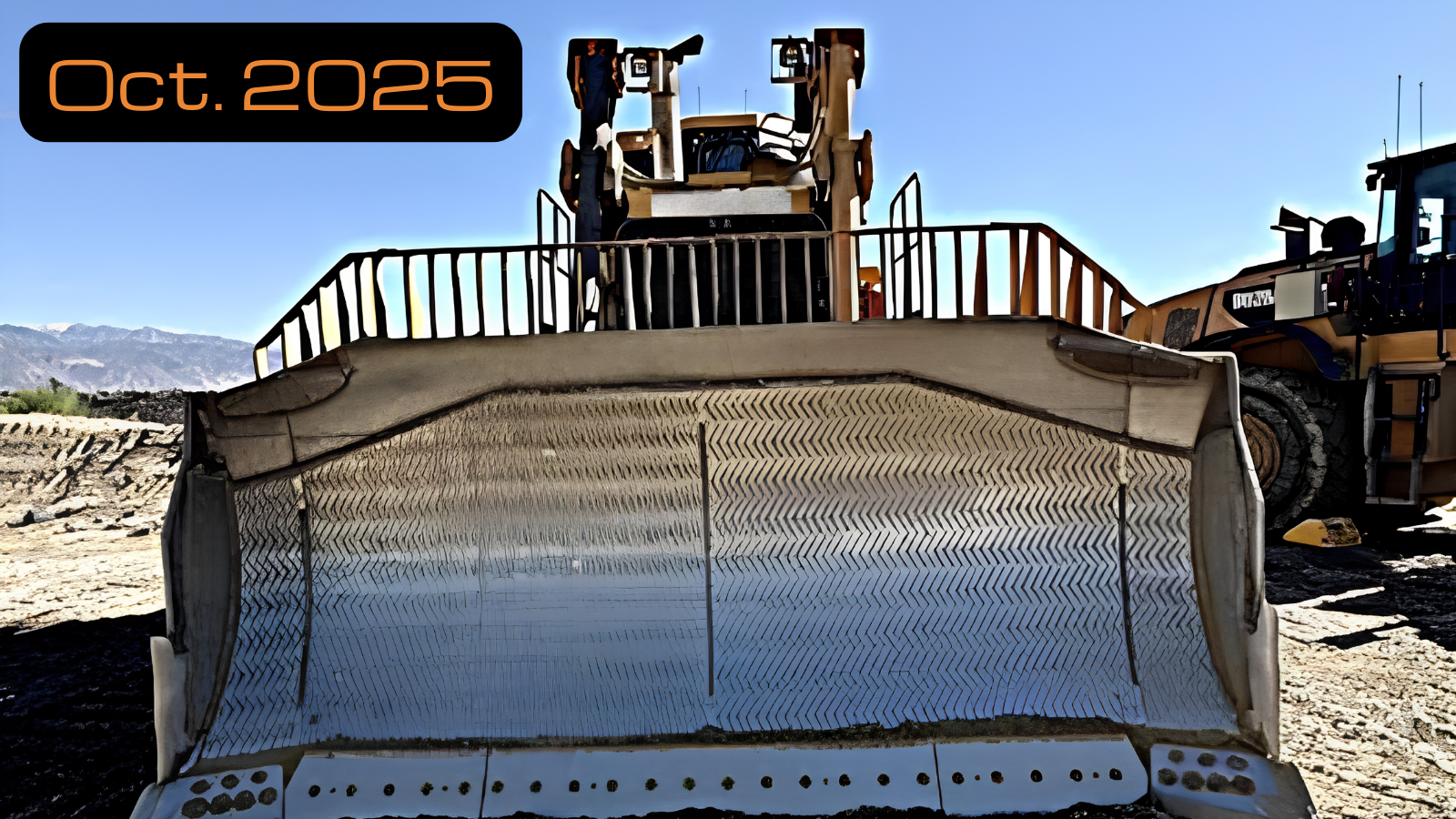
A mining-class track dozer working a concrete recycling yard has been running the same wear resistant CCO RaptorPlate® blade liner package since February 2017. At its latest inspection in October 2025, after 103 months and more than 17,000 operating hours, the liner had given up 0.126 inches of material. No failures and no dropouts along the way.
Concrete recycling does not give a blade liner an easy day. This is the story of one that has been taking that punishment for nearly nine years and still has plenty left in it.
Why Concrete Recycling Eats Blade Liners
What makes a recycling yard harder on a blade than most sites?
It is the combination. Most applications lean one way. A dozer in hard rock takes most of its beating from impact, while a dozer pushing fine material is mostly fighting abrasion. A concrete recycling yard hands out both at the same time. Large chunks of tear-out concrete hit the blade hard, rebar drags across the face, and broken concrete grinds at the surface on every single push.
That compound loading is where lesser plate gives up. Impact cracks the surface, abrasion works its way into those cracks, and sections start dropping out. Once a liner starts shedding pieces, the blade behind it is next in line.
103 Months of Measurements
The liner went on at a full thickness of 0.500 inches in February 2017. A spot check in June 2019 measured 0.475 inches. At the October 2025 inspection it measured 0.374 inches.
That is 0.126 inches of total wear across 103 months of continuous operation, an average of roughly 0.015 inches a year. At the latest inspection the package still had significant service life remaining, with nothing pointing to a changeout any time soon.
0.126 inches of wear in 103 months, without a single failure or dropout.
Why Predictable Wear Matters
What does a maintenance planner actually get out of this?
A liner that wears at a steady, measurable rate is a liner you can plan around. When the numbers hold up year over year, a maintenance team can schedule inspections and changeouts on its own terms instead of reacting to a failure in the middle of a shift.
Unplanned blade work parks a dozer and pulls a crew off whatever else they were doing, while production waits on parts. Every year a liner runs without surprises is a year that downtime stays on the schedule where it belongs.
The Number That Actually Matters
The price of a liner package is one number. What it costs to run over time is the number that shows up in the operating budget.
Based on the reported service life and operating hours, Raptor calculates the effective cost of this liner package at approximately $0.36 per operating hour. Over nearly nine years in a concrete recycling yard, that is what total cost of ownership looks like when the plate is matched to the application.
Proof Beyond One Yard
Concrete recycling is not the only place CCO RaptorPlate® has earned its keep. A Yukon contractor ran a single liner package for five years through a string of demanding applications on the same machine.
Read the Yukon CCO RaptorPlate® case study
Different material and a different operation, but the same outcome: a liner that outlasts expectations.
Where GSD® Gets Measured in Thousandths
At Raptor, we would rather prove we GSD® with a set of calipers than with a sales pitch. A liner that gives up 0.126 inches in nearly nine years of pushing concrete and rebar is the kind of result we are proud to put our name on.
Ready to Talk About Your Blade?
If you are running a dozer in a recycling yard or on a mine site and want a straight answer on whether CCO RaptorPlate® fits your application, reach out.
Click to Contact Raptor Mining Products
PEOPLE. SAFETY. QUALITY. VELOCITY.